Why the language we use to talk about coping mechanisms matters
This blog was originally posted on my substack on December 27, 2025. The original post can be viewed here.
A quick note before diving in: I am not encouraging anyone to engage in self-injury. This post is intended to explore the function of coping behaviors (including self-injury) and understand how the language we use to describe these behaviors impacts how we think about them. If you are struggling with any coping behaviors that you feel are having a negative impact on your well-being, I encourage you to reach out to someone (ex: a mental health provider, a loved one, a trusted community member, etc.) for support.
Content warning: This post discusses self-injury and other potentially-harmful coping behaviors.
I don’t like the language we use to talk about coping mechanisms. It’s usually rooted in binary thinking. There are “good” and “bad” coping mechanisms; “adaptive” and “maladaptive”; “positive” and “negative”; “functional” and “dysfunctional”; “helpful” and “unhelpful”; “effective” and “ineffective”; “self-harm,” and “self-care.”
The language we use to discuss coping behaviors reflects a tendency I see in dominant American culture to lean into either/or thinking. We judge one way of being or acting or thinking as acceptable and others as unacceptable. In reality, I think there’s a great deal more nuance.
Here’s how I see it: all the coping behaviors we use have a combination of benefits and consequences. These benefits and consequences don’t cancel each other out, to determine a true “value” of a given coping strategy or behavior. Instead, the benefits and consequences simply exist, side by side. It’s our job as individuals to make choices based on those benefits and consequences, and how they fit into our value systems and needs.
Let’s look at an example list of benefits and consequences of self-injury, so I can discuss what I mean in more detail. (Please note: this list is not exhaustive, nor is it applicable to all people.)
Potential benefits of self-injury1:
Rush of feel-good chemicals in the body can sometimes help ease physical or emotional pain temporarily.
Physical pain and intense physical sensation can help pull some individuals out of states of dissociation and depression, and potentially enabling some degree of embodiment and presence.
Intense sensations can sometimes help to interrupt/stop rumination and thought spirals, potentially reducing emotional distress.
Self-injury may be a way for people to express the severity of their internal emotional pain, when they do not have the words to describe it. This may enable folks to express and feel seen in their pain, and to ask for and receive support.
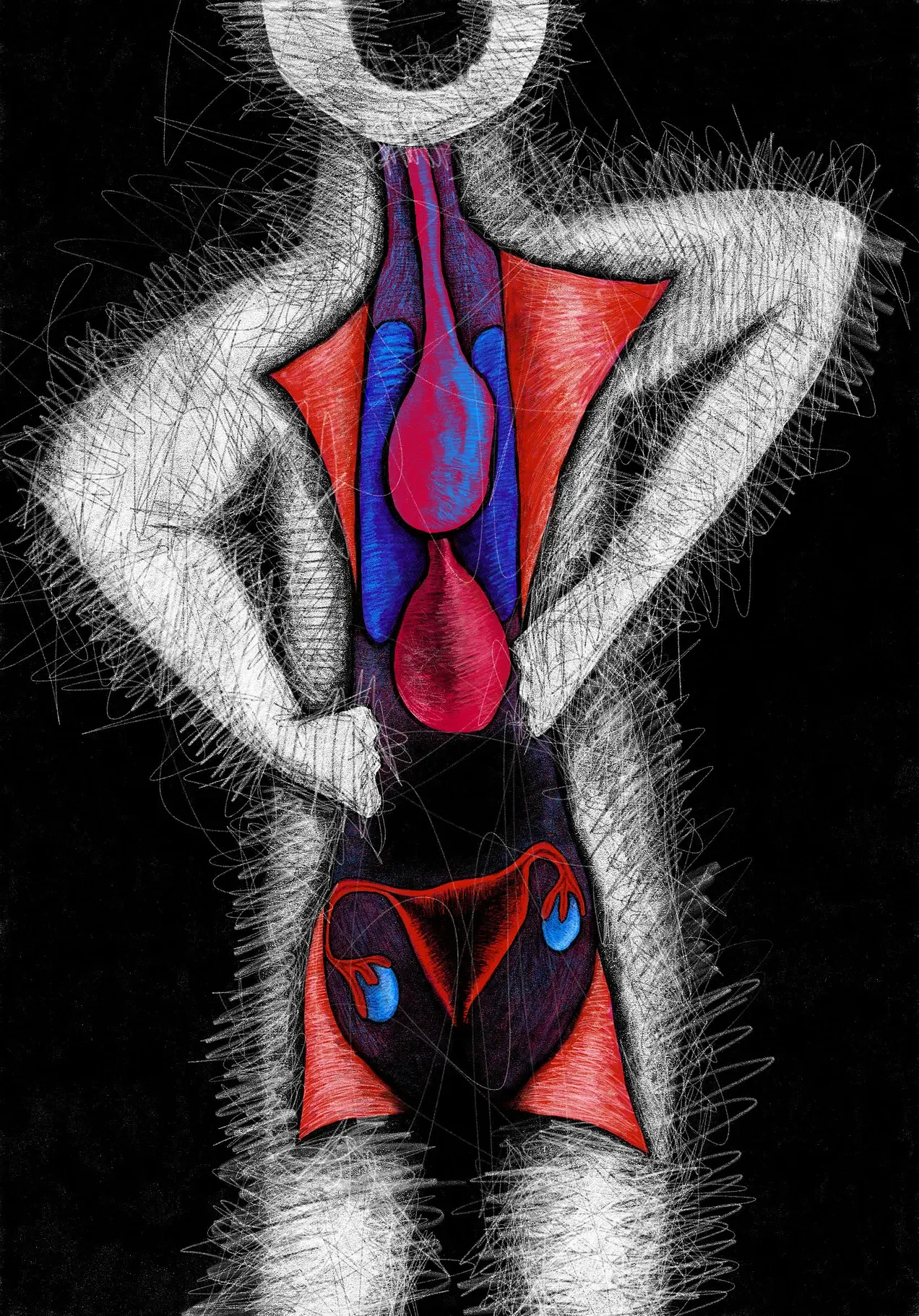
Digital drawing I created based on a prompt about vulnerability and being seen. For some (but not all) people who use self-injury as a coping strategy, self-injury can be about trying to create a physical analogue to the emotional pain they live with day-to-day. This can either be about us being able to see and validate our own pain, or having our pain seen and validated by others.
Potential consequences of self-injury:
Physical injuries cause pain in the moment, and later on as wounds become inflamed during the healing process.
Injuries can become infected, sometimes leading to serious medical complications.
Increased tolerance to body’s “feel good” chemicals can lead to increased frequency or severity of self-injury over time.
Repeated or severe injuries and infections can increase risk for developing severe infections and sepsis.
Visible scars and injuries can lead to others making judgments and assumptions, potentially leading to social conflict and/or isolation.
Hiding injuries and scars can reduce one’s ability to participate in activities of daily living (ADLs) and/or recreational and self-care activities.
Severe injuries can lead to serious medical complications, or even death, due to loss of blood, infection, etc.
Shame associated with engaging in self-harming behaviors can increase emotional distress (and harm physical health) over the long term.
Some folks may look at these lists and judge that individuals who choose to use self-harm are lacking in judgement, insight, or capacity to make decisions for themselves. After all, (and here I’m reiterating things I have heard from others, not things I personally believe) “if someone is risking death and severe illness in order to find temporary relief from distress, they must be out of their mind!!”
But, what if we turned that assumption around?
How bad must someone’s current distress be, for it to feel worth it to risk severe physical injury—or even death—to find temporary relief? The way I see it (and the way I’ve experienced it), that pain has got to be unbearable.
Now, I will say, I don’t want to entirely write off issues related to judgment. We know that part of brain development during childhood and young adulthood involves becoming more able to defer gratification and to understand delayed consequences. We may, therefore, want to think differently when talking to younger folks about the potential consequences of self-injurious behaviors. Kids and teens may need more reinforcement around how long-term consequences operate, depending on their developmental stage.
Similarly, we don’t want to assume that every person knows and fully understands the potential consequences that could arise from self-harming behaviors. At least where I live in the US, health literacy is often very limited. Many folks may not understand how common, or how severe, infections may be. Or, if they have never gotten an infection in the past, they may assume this indicates they will continue to be safe from infection in the future. In these cases, it can be important to assess someone’s knowledge about the potential consequences of self-injury, and to provide education if needed.
That being said, I think that we as a society have overemphasized the idea that people who engage in self-injury do not understand the potential consequences of their actions. I have personally witnessed—and also experienced firsthand—the efforts of medical providers to convince myself and others of the potential consequences of self-injury. They were so intent on convincing us of the consequences, they often did not even seem to consider that we did understand, and that the disconnect wasn’t about us understanding the potential consequences.
Here’s a glimpse into what I experienced:
I was living in a state of constant despair and hopelessness, and didn’t believe I deserved to be alive, or that it was possible for me to survive beyond the next few years. Hearing a doctor list the potential medical consequences I was facing didn’t make me want to self-injure less. It just made me feel more shame. It made me feel more hopeless about my future. It made me feel undeserving of medical care. It made me feel like a failure. It made the pain even worse, and the need to cope, even bigger.
But what if a doctor could’ve looked at the mess of scars criss crossing my body, and instead told me she was so sorry that I was in so much emotional pain; expressed that she understood that inflicting that physical pain on myself was worth all the negative consequences it brought me?
Maybe then, I would’ve felt seen in my pain? Maybe then I wouldn’t have felt so alone? Maybe then I could’ve gotten the help I needed sooner?
When I speak to folks about coping strategies, I try to do my best to move away from language that reinforces value judgments and either/or thinking. Do I still talk about benefits and consequences? Absolutely. Especially if someone’s actions are hurting myself or others, that’s something really important to address. But I don’t assume that I understand all the potential benefits of consequences another human might be facing, that are impacting how they choose to cope. I don’t assume that the person I’m speaking to is unaware of the consequences of their actions. And I don’t assign a value of “good” or “bad” to their actions (at least not outside of how a behavior may be impacting myself or others).
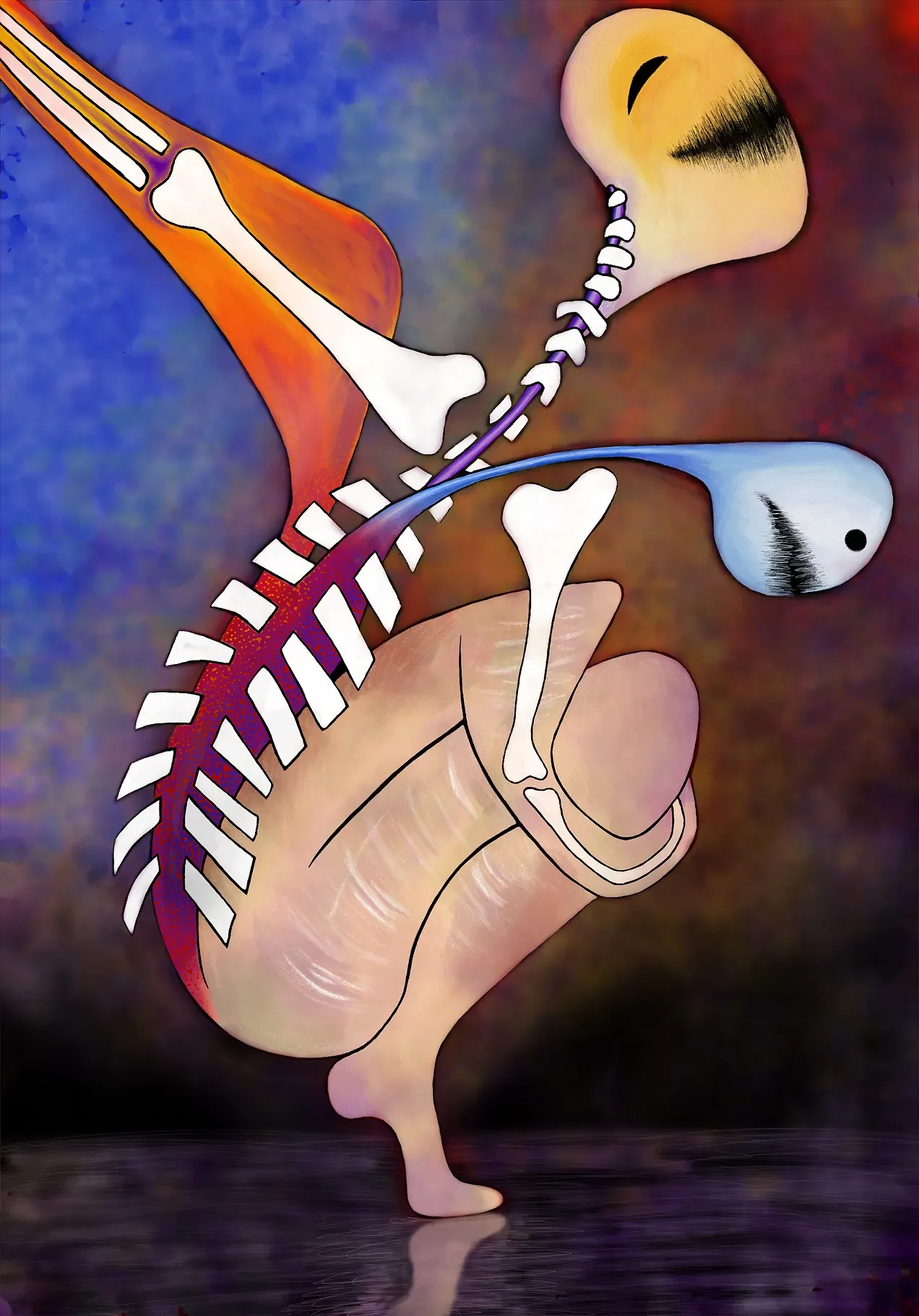
Final image in series focused on vulnerability and being seen. This image represents growth an healing. The two faces expressing different emotions represent holding both grief and celebration alongside one another, and the increased color palette after the previous images represents increased nuance in understanding and accepting the self.
I have so much more I want to say about this, but I can’t look at a screen for much longer, so I think I’m going to wrap up for now, and leave you with a few invitations:
Notice how you speak and think about the things you do to help cope with distress. Do you use language that assigns value? Do you feel pride or shame?
Be curious about “why.” If there’s something you do that you think doesn’t make sense, or isn’t beneficial to you, wonder what the possible reasons might be. If your why is a value judgement (ex: “I’m just lazy” or “I make bad choices”) try to investigate further. Is there a reason for why that doesn’t rely on a value judgment?
Remember, making value judgements isn’t inherently wrong. Our brains are built that way, to help us make snap decisions that keep us alive. But becoming more aware of these judgements, and of the why’s behind our behaviors, can be incredibly helpful for learning to navigate the world with greater cognitive flexibility, openness, and curiosity.
Note: my content/essays/prompts are not therapeutic in nature and should not be used as an alternative to therapy. They are intended to share my personal experiences, and to provoke thought and reflection. While I do my best to ensure that the information is accurate, I have limited capacity for fact checking and citations at the moment, due to my chronic health issues, and the content I share reflects the general pool of knowledge I pull from, which is, at times, flawed. I encourage you to do your own research to verify/check any factual information included in my writing.
If the phrase “benefits of self-injury” seems ludicrous, try thinking about it as “reasons why.” Often, we get caught up in thinking that “benefit” is the wrong word for something we see as overwhelmingly harmful. But even things that have a hundred reasons why not, usually have at least one or two reasons why. I’m talking about the why’s here, when I say “benefit.”
If the phrase “benefits of self-injury” seems ludicrous, try thinking about it as “reasons why.” Often, we get caught up in thinking that “benefit” is the wrong word for something we see as overwhelmingly harmful. But even things that have a hundred reasons why not, usually have at least one or two reasons why. I’m talking about the why’s here, when I say “benefit.”
1 If the phrase “benefits of self-injury” seems ludicrous, try thinking about it as “reasons why.” Often, we get caught up in thinking that “benefit” is the wrong word for something we see as overwhelmingly harmful. But even things that have a hundred reasons why not, usually have at least one or two reasons why. I’m talking about the why’s here, when I say “benefit.”
